Why Your Metal Building Sweats and How Spray Foam Insulation Solves It
That annoying drip from your metal building ceiling isn't a leak. It's condensation, and it's slowly destroying your investment while you wonder if patching the roof will help. Spoiler alert: it won't. We've watched countless property owners in Fuquay-Varina, Raleigh, Apex, Garner, and Holly Springs battle this frustrating problem before discovering the real solution has nothing to do with roofing repairs.
Metal building condensation happens for predictable reasons, and once you understand the science, the fix becomes obvious. Let's break down exactly why your metal structure sweats and how professional spray foam insulation eliminates the problem permanently.
The Science Behind Metal Building Condensation Problems
Moisture in the air doesn't become visible until it contacts a surface cold enough to trigger condensation. Your metal building provides thousands of square feet of perfectly cold surfaces whenever outside temperatures drop below the dew point of the interior air. Physics guarantees this will happen, regardless of how well you seal doors or add ventilation fans.
Here's the brutal reality. North Carolina's humid climate keeps moisture levels high throughout most of the year. When that humid air touches cold metal panels on winter mornings or during overnight temperature drops, water droplets form instantly.
This isn't a defect in your building. It's basic thermodynamics working exactly as predicted, creating rust, damaging stored materials, and making your warehouse or workshop perpetually damp and uncomfortable.
How Temperature Swings Make the Problem Worse
Metal buildings experience dramatic temperature fluctuations that traditional stick-built structures never see. Metal conducts heat so efficiently that your roof panels can be 30-40 degrees hotter than the air temperature on sunny days. When the sun sets, those same panels cool rapidly, creating perfect conditions for moisture condensation as warm interior air meets suddenly cold metal surfaces.
This cycle repeats daily throughout spring and fall across Central NC, creating persistent condensation problems that worsen over time. The moisture damage accumulates. Rust spreads. Equipment corrodes. Inventory gets ruined. Your HVAC system battles constantly changing conditions that it can never control. Traditional solutions like adding more ventilation or running dehumidifiers just waste energy without addressing the fundamental problem of uninsulated metal surfaces acting as condensation magnets.
Why Fiberglass Batts Fail to Stop Sweating Metal
Most metal building owners try fiberglass insulation first because it seems affordable. Then they discover why we rarely recommend it. Fiberglass batts allow air movement through and around them, letting warm, humid air reach cold metal surfaces where condensation forms exactly as before. The insulation gets wet, compresses, and loses what little R-value it provided while creating new problems.
Wet fiberglass becomes a breeding ground for mold and bacteria. The material sags and pulls away from metal panels, creating gaps that accelerate air leakage and moisture intrusion. You've invested money in a solution that doesn't solve the fundamental issue of preventing warm air from contacting cold metal. This is why we see so many frustrated property owners in Raleigh and surrounding areas replacing failed fiberglass with proper spray foam solutions.
What Makes Spray Foam the Permanent Condensation Solution
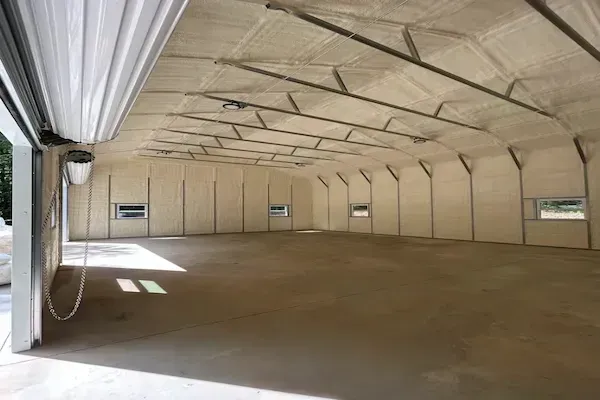
Closed-cell spray foam solves metal building condensation by eliminating the conditions that create it. The foam bonds directly to metal surfaces, creating a seamless thermal barrier with zero air gaps. Warm interior air never reaches the metal because the spray foam insulation maintains surface temperatures above the dew point, where condensation forms.
The magic happens at the molecular level. Closed-cell foam creates millions of tiny sealed cells that block both air movement and moisture vapor. This creates what building scientists call a vapor barrier, preventing humidity from migrating through to cold metal surfaces.
The result? Completely dry metal panels, no more dripping water, no rust formation, and perfectly controlled temperature throughout your building in Apex, Garner, and Holly Springs.
Long-Term Protection Beyond Just Stopping Condensation
Spray foam insulation delivers benefits that extend far beyond moisture control. The foam adds structural rigidity that helps resist wind loads and extreme weather. Property owners consistently report 35-40% reductions in energy costs as their HVAC systems finally work efficiently instead of fighting uncontrolled air leakage and thermal bridging through uninsulated metal.
The insulation never sags, settles, or loses performance like fiberglass batts. Properly installed spray foam maintains its R-value and air sealing properties for 30-plus years without maintenance or replacement.
You eliminate condensation damage to inventory and equipment while creating comfortable working conditions that make your metal building actually usable year-round across all seasons North Carolina throws at you.
Professional Application Ensures Complete Moisture Protection
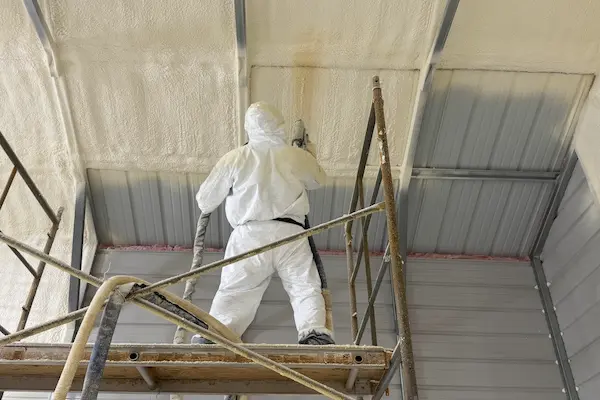
DIY spray foam kits and budget insulation contractors create more problems than they solve with incomplete coverage and improper foam density. Professional installation requires calibrated equipment, certified training, and an understanding of building science principles that determine proper application techniques for metal structures.
Energy Saving Insulation brings over 20 years of experience eliminating condensation problems in metal buildings throughout Central North Carolina. Our BBB A-rated team uses professional-grade materials and proven application methods that create complete thermal barriers engineered specifically for our region's climate challenges.
We don't guess at solutions. We apply building science that works predictably every time.
Stop Metal Building Condensation with Energy Saving Insulation
Watching your metal building drip water while rust spreads and equipment corrodes doesn't have to continue. Professional spray foam insulation from Energy Saving Insulation eliminates condensation permanently while cutting energy costs and protecting your investment.
Call (984) 315-7499 for a free consultation. We'll show you exactly how spray foam solves your specific moisture problems and provide honest pricing for professional installation.
Whether you own a warehouse in Raleigh, a workshop in Apex, or an agricultural building in Garner, we deliver insulation solutions that stop the sweating and start protecting your property today.
Frequently Asked Questions
Why does condensation form in metal buildings but not in wood buildings?
Metal conducts heat rapidly, creating cold surfaces that trigger condensation when humid air contacts them. Wood buildings insulate better naturally and don't create the extreme surface temperature differences that cause sweating.
Will adding more ventilation stop my metal building from sweating?
No, ventilation alone cannot prevent condensation because it doesn't address the cold metal surfaces that trigger moisture formation. You need insulation that creates a thermal barrier, preventing temperature differentials.
Can I stop condensation by heating my metal building more?
Heating helps temporarily but wastes enormous energy and still allows condensation during temperature swings. Proper spray foam insulation solves the problem permanently at a much lower cost than continuous heating.
How quickly does spray foam stop condensation after installation?
Spray foam eliminates condensation immediately after installation and curing (typically 24-48 hours). The thermal barrier prevents warm air from reaching cold metal surfaces where condensation would form.
Does spray foam work in extremely humid climates like coastal NC?
Yes, closed-cell spray foam works exceptionally well in humid climates because it creates a complete vapor barrier. Coastal and piedmont NC properties benefit greatly from their moisture-blocking properties.
Articles you might be interested in
Closed-Cell vs Open-Cell Spray Foam for Metal Building Insulation in NC
How to Insulate a Metal Building to Prevent Condensation and Temperature Swings
Why Builders Prefer Closed Cell Spray Foam: Understanding Its R-Value and Moisture Barrier Benefits
The Long-Term Benefits of Spray Foam Insulation for Your Property Value